






The Kingdom is modernising its airports, expanding international routes and attracting investment with the aim of becoming an aviation hub by 2029
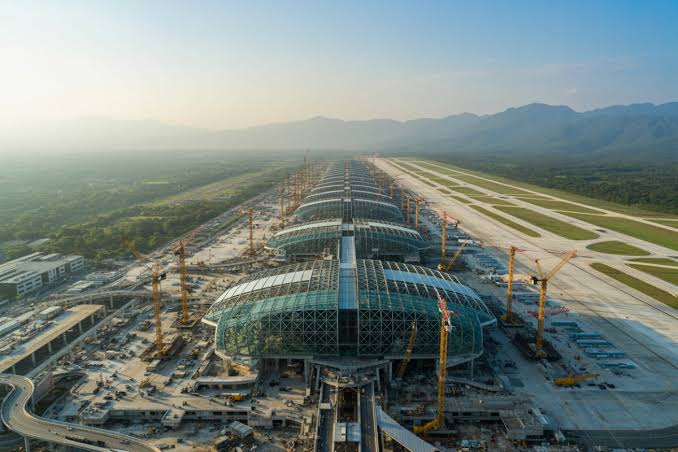
The Thai government is focusing on developing regional airports, aiming to transform them into powerful economic gateways for the country and stimulate a new wave of tourism and investment. As part of this ambitious strategy, a large-scale infrastructure modernisation is underway, alongside the expansion of the route network and the introduction of cutting-edge technologies.
The Thai Ministry of Transport has presented a progress report on the implementation of the ‘Airports for Regional Development’ strategy. Key priorities include expanding international flights, enhancing aviation safety and attracting new commercial opportunities. All these measures form part of Thailand’s overarching goal of becoming a global aviation hub by 2029.
Deputy Minister of Transport Phattharapong Phattharaprasit summarised the results of his first 90 days in office. He oversees key departments and organisations: the Department of Airports (DOA), the State Air Navigation Company of Thailand (Aerothai), the Civil Aviation Training Centre (CATC), and the hotel at Suvarnabhumi International Airport.
The initiatives cover a wide range of areas, including infrastructure, flight safety, technological equipment, staff training, and increasing revenue and improving management efficiency. The Department of Airports is consistently implementing its strategy, strengthening the role of regional airports as key centres of economic development.
For example, Udon Thani Airport is now fully equipped to handle international flights and provides a full range of customs, immigration and quarantine services. A significant achievement was the launch of the Udon Thani–Suvarnabhumi–Tokyo (Narita) route, whilst the number of domestic flights from this airport has increased by 50 per cent.
Hua Hin Airport is undergoing active modernisation to international standards in order to accommodate direct international flights. Services to Kuala Lumpur have resumed, and preparations are underway to launch new routes to Singapore, Taipei and Shanghai, which will significantly enhance its appeal to tourists.
The Airports Authority is actively collaborating with leading airlines to establish new routes that will connect Thailand’s regional cities with major economic centres in China, Malaysia and other countries. This promotes trade and cultural exchange, as well as attracting tourists to lesser-known regions.
In collaboration with the Tourism Authority of Thailand, the ‘Fly and Drive’ project is being implemented, bringing together eight tourist provinces under the ‘3–3–1–1’ concept. This approach aims to create convenient and comprehensive tourist itineraries that encourage exploration of the country’s hinterland.
Particular attention is being paid to flight safety. The installation of the long-awaited ILS/DME (Instrument Landing System/Distance Measuring Equipment) system at Khon Kaen Airport is being expedited; its launch had been delayed for more than ten years. This system will significantly improve the safety of international flights and the efficiency of landings in challenging weather conditions.
In addition, a special working group has been set up to effectively tackle the problem of bird strikes. Such incidents cause damage estimated at over 530 million THB (approximately 14.4 million USD) annually and pose a serious threat to flight safety.
To boost revenue, the Airports Department is actively promoting local products under the ‘One District, One Product’ (OTOP) scheme within airport premises. There are also plans to extend the term of commercial leases from three to thirty years to encourage investment in maintenance, repair and overhaul (MRO), cargo transport and the construction of aircraft hangars.
These measures to attract investment and develop commercial activities are expected to generate over 380 million THB (approximately 10.3 million USD) in additional revenue over the next five years. This demonstrates a commitment to creating a sustainable economic model for operating regional airports.
Aerothai, the company responsible for air navigation services, is also contributing actively. It has increased the discount on domestic air navigation charges from 25 per cent to 30 per cent, thereby easing the financial burden on airlines. Digital Tower systems are being introduced at the strategically important Suvarnabhumi and Don Mueang airports, whilst remote air traffic control systems are being implemented at Narathiwat and Betong airports, enhancing the efficiency of air traffic control.
The Civil Aviation Training Centre (CATC) plays a vital role in training highly qualified specialists for Thailand’s aviation industry. Recently, 4,634 people have trained at the centre, of whom 1,992 have successfully completed their programmes. The centre has trained over 3,500 pilots, ensuring reliability.
Read More Articles Here
Read More Articles Here