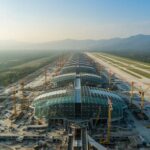







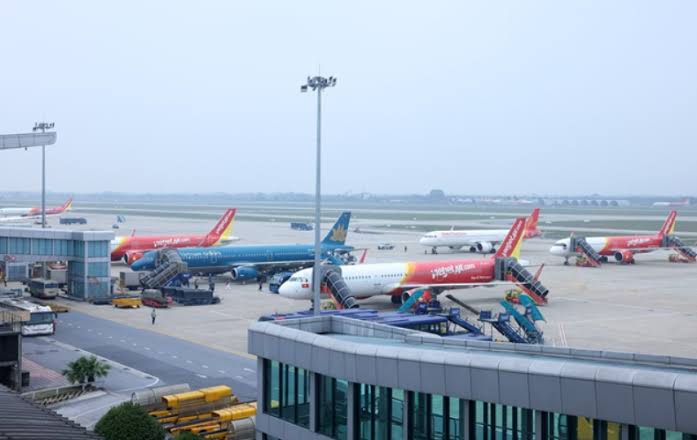
The South-East Asian air transport market continues to change rapidly. In August, Thailand slipped to third place in the regional ranking by number of available seats on flights, holding this position for the second month running. This decline is due to a significant reduction in the number of flights, which allowed Vietnam to move into second place against a backdrop of growing demand for air travel in that country.
Trends in the regional ranking
According to a report by OAG, a leading provider of data and analytics for the global aviation industry, Vietnam demonstrated the fastest growth rate in seat capacity in South-East Asia. Its seat capacity increased by 10 per cent year on year, reaching 7.27 million seats. As a result, Vietnam took second place, overtaking Thailand as early as July. Vietnam’s domestic air traffic growth is particularly notable: capacity rose by 13.8 per cent to more than 4.7 million seats.
At the same time, Thailand’s total passenger capacity fell by 1.7 per cent to 7.19 million seats. Indonesia remains the regional leader with 11 million seats, having recorded growth of 4.3 per cent compared with the same period last year. These figures illustrate the dynamics of the region’s air transport market and the growing competition.
The situation at Thai airports
Suvarnabhumi Airport (BKK) in Bangkok remains among the region’s three busiest airports, ranking third with a capacity of 3.22 million seats and growth of 1 per cent. It is surpassed only by the airports in Singapore (3.64 million seats) and Jakarta (3.32 million seats). However, Don Mueang Airport (DMK), Bangkok’s historic and now main hub for low-cost carriers, reported a significant 7.5 per cent decline in passenger throughput to 1.52 million in August.
This decline was driven by a sharp reduction in flights operated by low-cost carriers based at Don Mueang, particularly Thai AirAsia. The airline reduced its capacity by 23.4 per cent year-on-year — to 1.44 million seats. Thai AirAsia had previously announced a 30 per cent reduction in flights in May–June to minimise the impact of rising fuel prices caused by protracted conflicts in the Middle East.
Experts’ views on competition
Patsy Permwongsin, Executive Director for ASEAN, South Asia and the South Pacific at the Tourism Authority of Thailand (TAT), noted that the current ranking may reflect growing tourist demand in Vietnam, which has a well-developed network of major airports serving passengers across the country. Vietnamese tour operators often book a significant number of seats on flights in advance and actively use joint promotions, which helps flights fill up quickly.
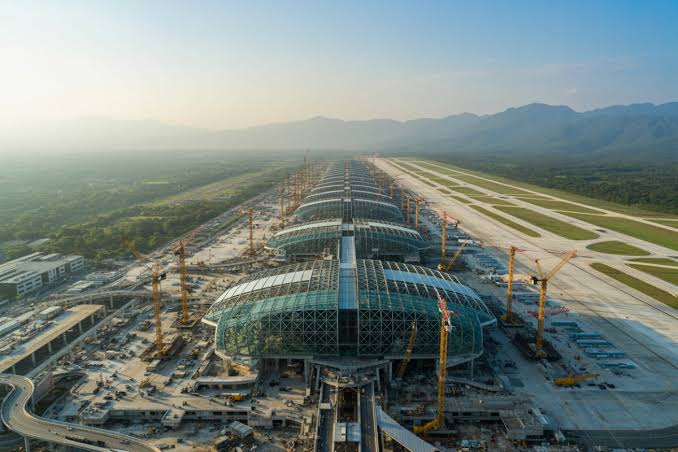
She also emphasised that Vietnam’s new tourist destinations, such as Da Nang and Phu Quoc Island, are actively attracting direct flights. This allows tourists to visit these destinations without transiting via major hubs, unlike in Thailand, where most travellers heading to other provinces are still forced to use Bangkok’s two main airports. Nevertheless, Thailand retains the advantage of attracting more international airlines. The Thai government is actively developing new airports, such as U-Tapao and Hua Hin, to facilitate travel, expand the range of direct flights and distribute tourist flows more evenly.
Vichai Sahassapol, vice-president of the Thai Travel Agents Association, believes that Vietnam is actively developing new attractions and infrastructure, enabling it to compete successfully with Thailand. He noted that foreigners perceive Vietnam as a ‘fresh’ destination, whereas Thailand still relies more heavily on its existing tourism resources. Strong GDP growth and an investment boom in Vietnam are also attracting foreigners and investors, positively impacting the development of the country’s aviation and tourism sectors.
The overall picture of the South-East Asian market
Overall, in August, total capacity in South-East Asia stood at 51 million seats, up 0.8 per cent year-on-year. Of this total, 56 per cent (around 28.5 million seats) was accounted for by international flights. Traditional airlines continue to hold the largest share of capacity in the region — 56 per cent — having recorded growth of 5.9 per cent year-on-year. At the same time, low-cost carriers’ capacity fell by 4.9 per cent year-on-year to 22.5 million seats, reducing their share from 47 per cent to 44 per cent. This decline is mainly due to fewer flights by Thai AirAsia (-23.4 per cent) and AirAsia (-17 per cent).
Read More Articles Here
Read More Articles Here